
 English
 Arabic
LEED Green Associate
Foundational green building training aligned with USGBC LEED v4/v4.1 standards — preparing professionals to lead sustainable projects and earn a globally recognised credential, aligned with Saudi Visi...
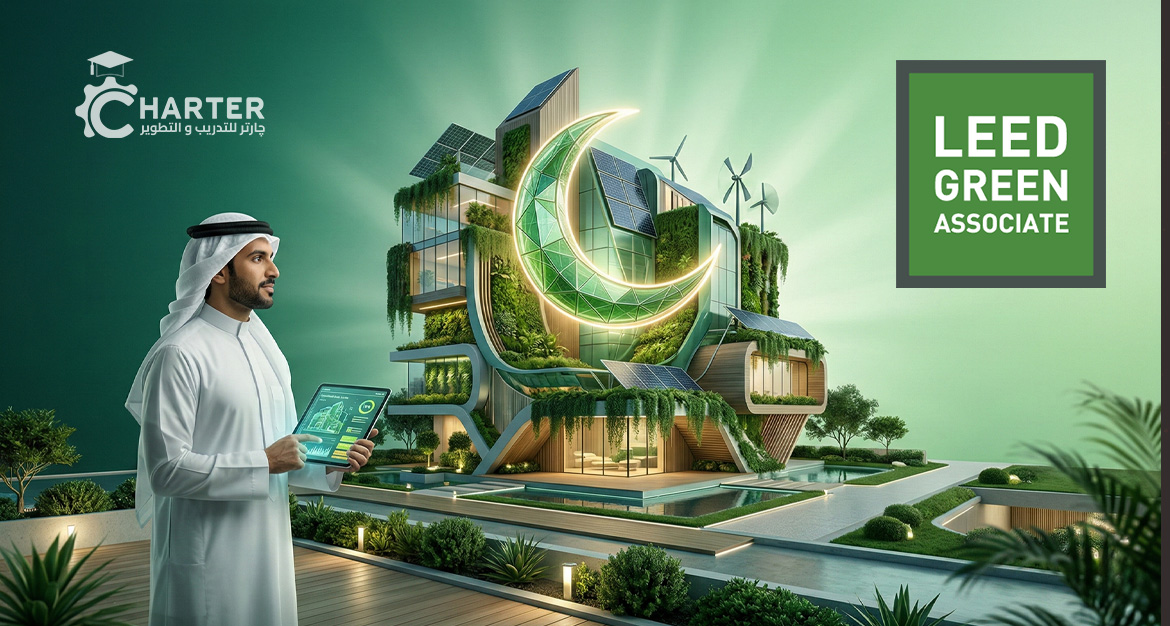
LEED Green Associate
This course includes:
- 01h 54m 14s
- 6 Lectures
- 0 Downloadable resources
- Certificate of completion
Instructor
Mohamad Hachoui
Overview
Foundational green building training aligned with USGBC LEED v4/v4.1 standards — preparing professionals to lead sustainable projects and earn a globally recognised credential, aligned with Saudi Vision 2030. The LEED Green Associate course is a structured foundational programme introducing participants to the core principles of green building and sustainable development in alignment with the U.S. Green Building Council (USGBC). Delivered through Charter Center's SIMULIVE system, the course provides a thorough grounding in the LEED rating framework — from sustainable site strategies and water efficiency to energy performance, materials selection, and indoor environmental quality. Participants leave fully prepared to contribute to certified green building projects and to sit the LEED Green Associate exam with confidence.
Description
Course Highlights
6 Structured Modules
Comprehensive curriculum covering every LEED knowledge domain from foundation through exam readiness.
Flexible Study Pace
SIMULIVE delivery allows participation from any GCC location with recorded access to all sessions.
GBCI Exam-Aligned Content
Every topic directly maps to the LEED Green Associate Candidate Handbook and current GBCI exam blueprint.
Dual Accreditation
TVTC Saudi accreditation and CPD UK recognition — maximising credential value for GCC and international professionals.
Course Curriculum
Green Building Fundamentals & Sustainability Principles
This opening module establishes the conceptual and practical framework that underpins every LEED credit category. Participants examine the environmental drivers behind green building adoption — including climate change, resource depletion, and occupant health — and learn how the built environment contributes to and can mitigate these challenges. Topics include lifecycle thinking, the triple bottom line in construction, embodied versus operational carbon, and how global frameworks such as the Paris Agreement intersect with building sector obligations. The module also introduces the USGBC, GBCI, and the evolution of LEED from version 1.0 through v4.1, contextualising how the standard has matured to address contemporary sustainability priorities. Regional case studies from Saudi Arabia, UAE, and Qatar illustrate how green building principles translate into project-level decisions in the GCC climate and regulatory context.
The LEED Rating System — Framework, Credits & Certification Process
This module provides an authoritative deep-dive into the LEED rating system architecture. Participants learn how LEED is organised across multiple rating systems (BD+C, ID+C, O+M, ND, Homes) and understand when each is appropriate for a given project type. The module dissects the credit structure — prerequisites versus optimisation credits, category weightings, bonus points, and regional priority credits — giving participants a clear map of how projects accumulate points toward Certified (40–49), Silver (50–59), Gold (60–79), and Platinum (80+) certification. The certification process is covered in full: project registration on LEED Online, documentation requirements, the GBCI review pathway, and appeals procedures. Participants also examine Minimum Programme Requirements (MPRs) and how to apply LEED Interpretations and Alternative Compliance Paths (ACPs) — critical for project teams adapting the system to GCC-specific site and climatic conditions.
Sustainable Sites & Water Efficiency
Sustainable site selection and water stewardship are two of the most impactful early decisions on any LEED project. This module begins with the Location & Transportation credit category — examining transit-accessible sites, walkability, reduced parking ratios, bicycle infrastructure, and access to community amenities — and demonstrates how site decisions made at project inception directly affect the LEED point total. The Sustainable Sites credit category is then explored in detail: construction activity pollution prevention, site assessment, site development for habitat protection, open space requirements, rainwater management, heat island reduction strategies (surface and roof), and light pollution reduction. The Water Efficiency category follows, covering indoor water use reduction using EPA WaterSense fixtures, building-level water metering, outdoor irrigation optimisation, and process water strategies. Given Saudi Arabia's acute water scarcity, instructors draw on Saudi Building Code water provisions and GCC utility benchmarks to ground each strategy in the regional context participants will actually work within.
Energy & Atmosphere
Energy performance typically carries the largest credit weight in LEED projects, making this module central to exam success and professional value. Participants are introduced to building energy modelling fundamentals — the role of energy simulation software, baseline versus proposed performance path, and ASHRAE 90.1 compliance as the prerequisite standard. The module then works through each Energy & Atmosphere credit in sequence: enhanced commissioning (Cx) and monitoring-based commissioning, on-site and off-site renewable energy systems, demand response strategies, enhanced refrigerant management, and green power and carbon offsets. Climate-adaptive strategies specific to the Gulf — passive cooling, high-performance glazing, shading systems, and district cooling integration — are examined alongside ASHRAE 55 thermal comfort standards. Participants learn to assess the energy efficiency impact of each intervention and understand how project teams document energy performance for GBCI review using the EA Energy Use Intensity (EUI) framework.
Materials & Resources — Indoor Environmental Quality
The Materials & Resources category applies lifecycle thinking to the physical fabric of buildings. This module covers storage and collection of recyclables, construction and demolition (C&D) waste management planning, building product disclosure and optimisation using EPDs (Environmental Product Declarations), sourcing criteria for raw materials extraction, and the use of regional materials to reduce transportation impacts — particularly relevant given GCC supply chain structures. The Building Product Optimisation credits and the role of Cradle to Cradle certification, Red List avoidance, and ingredient disclosure frameworks are examined in practical terms. The second part of this module addresses Indoor Environmental Quality (IEQ): minimum indoor air quality (IAQ) performance, environmental tobacco smoke control, low-emitting materials specifications using CDPH/BIFMA standards, construction IAQ management plans, interior lighting quality, daylight access, quality views, and acoustic performance standards. The module concludes with worked examples from GCC office and residential projects demonstrating how IEQ strategies simultaneously reduce health risks, improve occupant productivity, and contribute LEED credits.
Innovation, Regional Priority & LEED Green Associate Exam Preparation
The final module completes the LEED knowledge framework and shifts focus entirely to exam readiness. Participants first explore the Innovation credit category — how exemplary performance, innovative strategies, and LEED Accredited Professional participation earn bonus credits — and then the Regional Priority category, which identifies six credits per geography that USGBC has identified as environmentally critical for that region. The GCC regional priority credits are highlighted and discussed in the context of participants' project environments. The bulk of this module is dedicated to structured exam preparation: a full review of all LEED Green Associate exam domains mapped to the current GBCI Candidate Handbook, exam format and timing strategy, high-frequency terminology glossary, scenario interpretation techniques, and a full-length practice exam with instructor-led debrief. Participants leave with a personalised study plan, recommended supplementary resources, and a clear roadmap to scheduling and sitting their GBCI exam within 90 days of course completion.
Standards, Frameworks & Tools Referenced
Professional Competencies Developed
LEED System Fluency
Navigate any LEED rating system, interpret credit requirements, and advise project teams on certification strategy.
Sustainability Analysis
Apply lifecycle thinking, assess environmental impact trade-offs, and evaluate material and system choices against sustainability criteria.
Energy & Resource Literacy
Interpret energy models, read water audits, evaluate MEP system efficiency, and apply demand-reduction strategies across building typologies.
Documentation & Compliance
Structure LEED documentation packages, support GBCI credit submittals, and maintain project certification records aligned with Saudi Building Code provisions.
Expected Outcomes Upon Completion
Comprehensive understanding of the LEED rating system, its credit categories, and the certification pathway from registration through award
Ability to contribute to green building project teams in a substantive professional capacity — supporting credit documentation, design reviews, and sustainability reporting
Full preparation to sit and pass the LEED Green Associate exam, including command of GBCI exam format, high-frequency terminology, and scenario-based question handling
Practical knowledge of GCC-specific sustainability challenges and how LEED credit strategies are adapted to the Saudi Arabian building context, climate, and regulatory environment
A recognised, dual-accredited credential (TVTC + CPD UK) that adds verified professional development value to your profile for employer, client, and regulatory audiences
No Modules Available
Modules will be added soon